
The Evolution of Web Automation: From Selenium to AI-Native Platforms

Chris Schlaepfer|CEO & Co-founder
Web automation has evolved dramatically over the past decade. Tools like Selenium laid the foundation, modern frameworks like Playwright improved reliability, and a new generation of AI-native platforms is now pushing the workflow even further.
My own path through this evolution started early in my career.
My first job out of college was as a software engineer at TripAdvisor, where I worked on the Hotels product - shipping features, fixing bugs, and doing the usual early-career engineering work.
About a year in, I was voluntold to take over our automated UI regression tests. What followed was six months of some of the most grueling engineering work of my career.
At the center of all of it was Selenium.
Selenium: The Original Standard for Browser Automation
Selenium became the default browser automation tool for a reason. It's open source, supports nearly every programming language, and works across all major browsers. For many teams, Selenium was their first introduction to automated web testing.
Selenium isn't bad software - in fact, it is incredibly powerful - but it is outdated. It was designed in an era of mostly static HTML and slower release cycles, and gives engineers direct, granular control over their automation and setup.
That flexibility is a double-edged sword: it offers immense power, but it requires teams to manually architect and manage nearly every layer of the automation stack themselves.
The Maintenance Cost of Selenium Automation
When I inherited our Selenium test suite, I quickly learned that writing new tests wasn't the hardest part. Keeping existing tests running was.
Selenium requires developers to explicitly manage many pieces that modern browser automation tools now handle automatically:
Browser and WebDriver management
Selenium relies on browser-specific WebDriver implementations like ChromeDriver, GeckoDriver, and EdgeDriver. Keeping test environments stable means ensuring driver versions stay aligned across machines and CI environments.
Dynamic element handling
Modern web applications rely heavily on asynchronous behavior, lazy-loaded content, and complex client-side state. Selenium requires developers to manually implement wait logic to handle these cases - one of the most common sources of flaky tests.
Test durability and retries
Out of the box, Selenium provides limited support for retries and recovery when tests fail due to transient issues. Handling instability often means writing custom wrappers and error-handling logic.
Individually, these issues are manageable. Together, they create a constant maintenance burden for test automation teams.
Selenium Test Infrastructure Challenges
The infrastructure required to run Selenium tests reliably often becomes just as complex as the tests themselves.
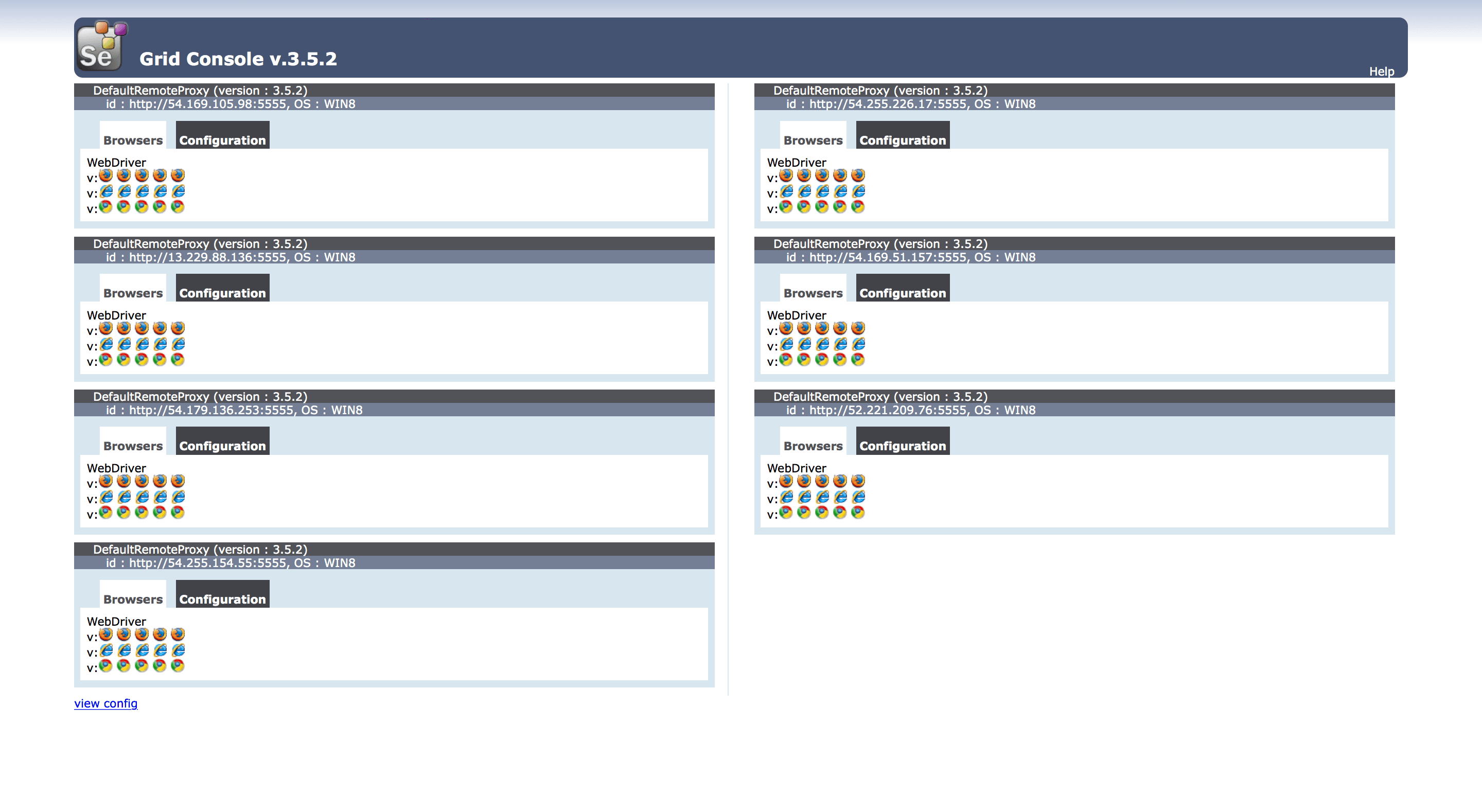
In our case, tests ran on a fleet of Mac minis in a small on-prem data center. Managing multiple WebDriver processes, cleaning up orphaned sessions, and physically rebooting machines became part of the job.
Between Selenium Grid, Jenkins, browser drivers, and custom orchestration logic, the system accumulated failure points quickly. Over time, maintaining the automation infrastructure consumed more effort than improving test coverage or test quality.
Playwright: A Modern Framework for Web Automation
Selenium is fundamentally a browser automation platform. Playwright, by contrast, is a modern web automation framework designed to reduce friction for developers.
Playwright introduced several improvements that significantly changed how teams approach browser automation:
- Built-in waits and retry logic that reduce flakiness
- A simplified setup process with a single npm install command
- A more ergonomic API and assertion model
These improvements lowered the barrier to entry, not just for test automation, but for more general workflow automation on the web. They are also among the reasons we chose Playwright as the foundation for BrowserBook.
However, even with Playwright, browser automation still involves significant workflow overhead. Developers still need to:
- Discover and maintain reliable selectors
- Context-switch between browser, code editor, and execution environment, terminal, etc.
- Build or maintain infrastructure for running and scheduling automation
Playwright made browser automation more reliable and easily approachable, but not effortless.
BrowserBook: An AI-Native Web Automation Platform
AI gives us an opportunity to rethink how developers build browser automation workflows from the ground up.
BrowserBook is an AI-native web automation platform built on Playwright's modern foundation. It leverages the stability improvements and approachable interface while integrating AI directly into development workflows, rather than as an add-on.
The goal is simple: reduce the cognitive and operational overhead of browser automation.
AI as a First-Class Automation Collaborator
In BrowserBook, AI acts as a collaborator rather than an automation black box.
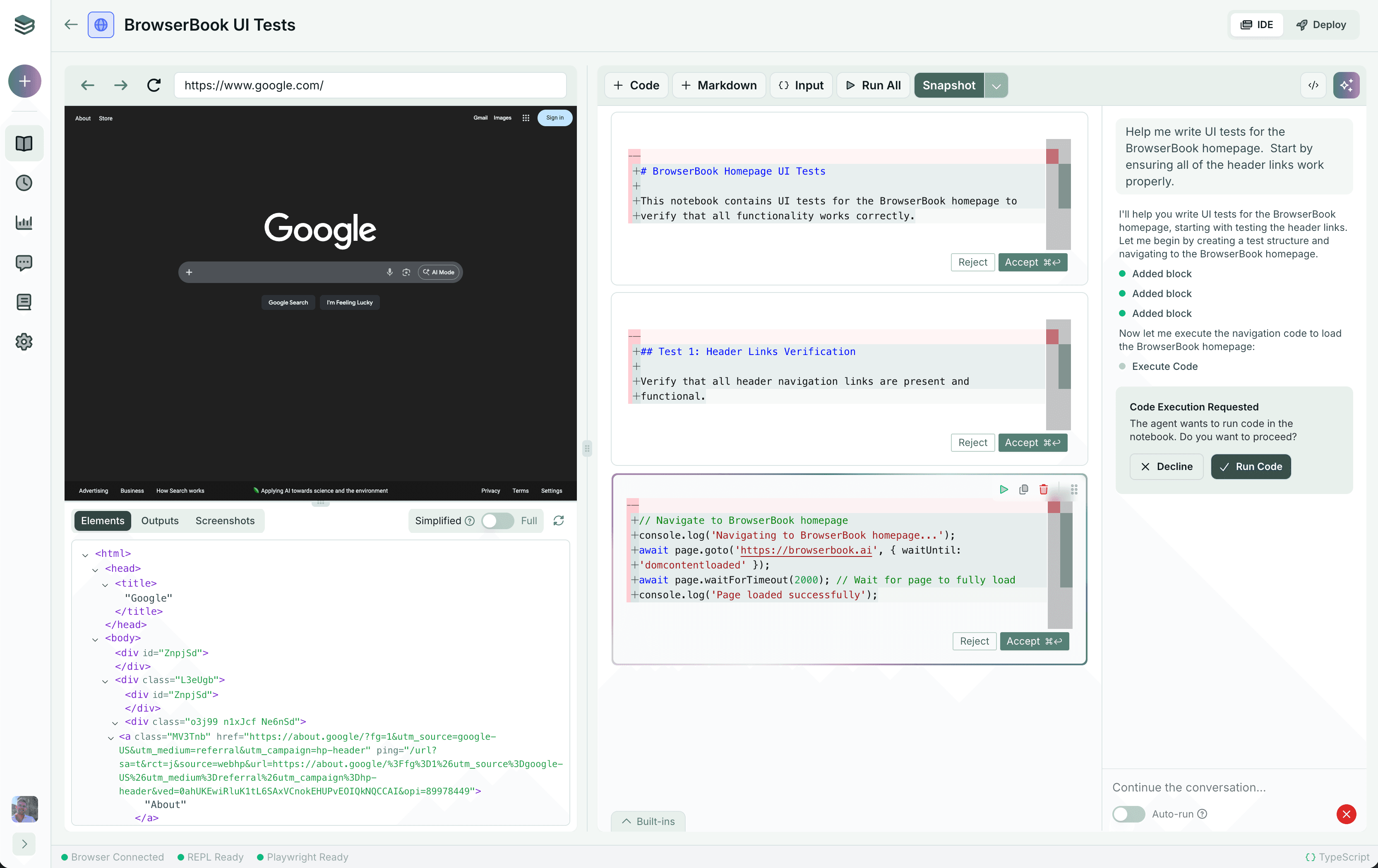
Both the developer and the AI agent operate within the same environment, with access to a live browser and the ability to run automations on demand. For developers, execution is a button click. For the agent, it's a tool call.
The AI handles selector discovery, Playwright best practices, and repetitive automation tasks. Developers remain responsible for business logic and intent, using AI to eliminate busywork rather than surrender control.
Built-In Execution and Infrastructure
Browser automation often fails not because of test logic, but because of brittle execution environments.
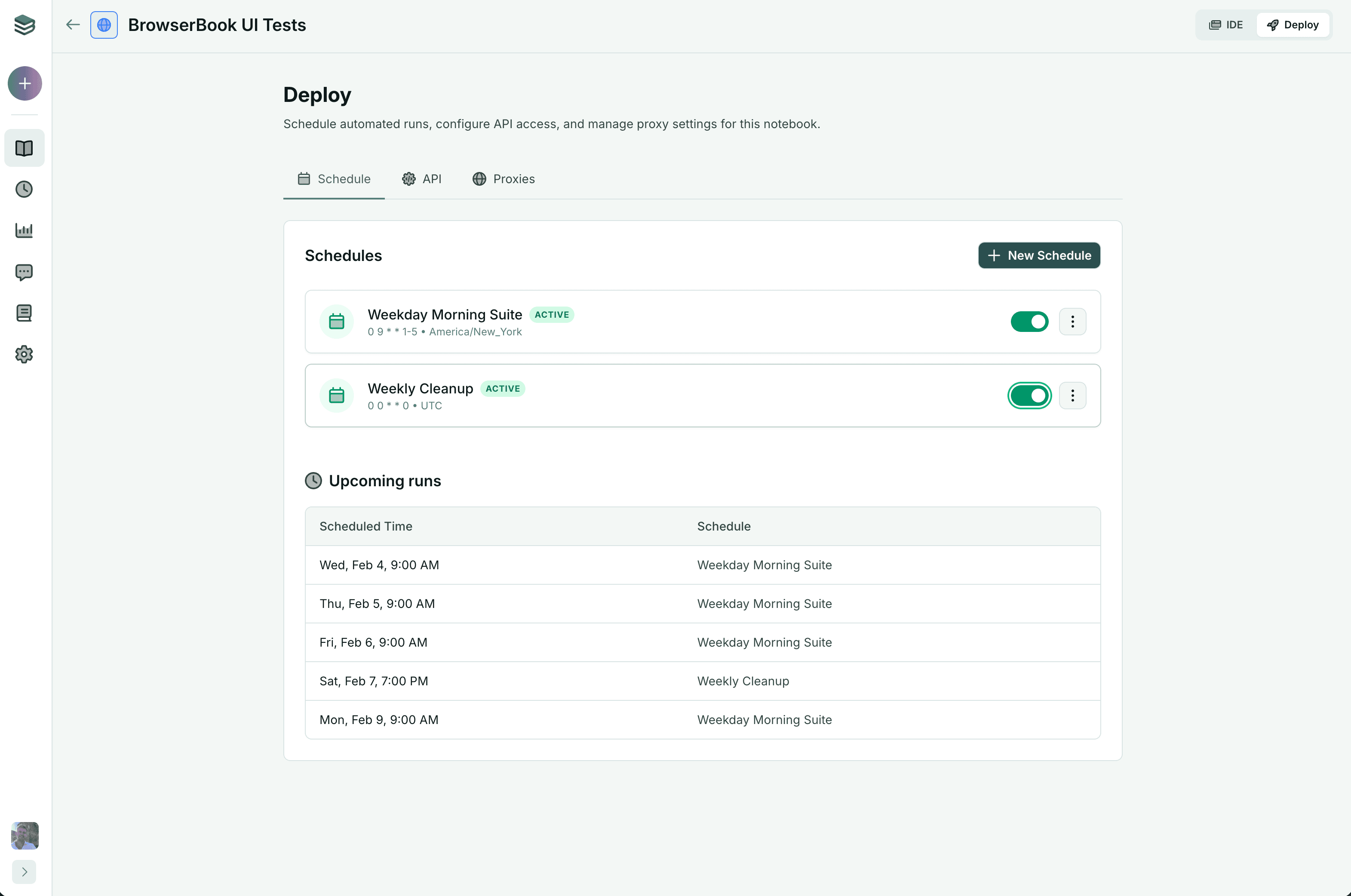
BrowserBook removes the need to build custom runners, queues, schedulers, and retry systems. Execution and scheduling are handled by the platform, reducing operational complexity and long-term maintenance costs.
Everything is available directly in BrowserBook, out of the box.
Instead of replacing tools like Playwright, BrowserBook builds on them, adding intelligence, context sharing, and a managed execution layer.
The Evolution of Browser Automation Tools
This isn't a story about Selenium being "bad," Playwright being "better," and BrowserBook being the "best."
It's a story about the natural evolution of browser automation tools.
Selenium introduced flexibility and broad adoption, but required deep investment to maintain.
Playwright improved reliability and developer experience, but still left significant workflow gaps.
BrowserBook represents the next step: AI-native automation paired with managed infrastructure.
It's the tool I wish I'd had when I was babysitting flaky Selenium tests and rebooting Mac minis, and the one modern teams need if web automation is going to be something they use productively, not something they endure.